
Can Bees Get Through Bird Netting? Pollinators & Mesh Size
Bird netting is one of the most popular solutions to protect fruit, vegetable crops, and gardens from bird damage. However, many gardeners often wonder, can bees get through bird netting? How does mesh size affect pollinators, and what should be considered to protect crops while allowing essential pollination?
Yes, most standard bird netting with mesh sizes around 17-20mm (about 0.7 to 0.8 inches) allows bees to pass through easily. These mesh sizes are designed to block birds but enable bees, which are smaller in size, to access flowers for pollination.
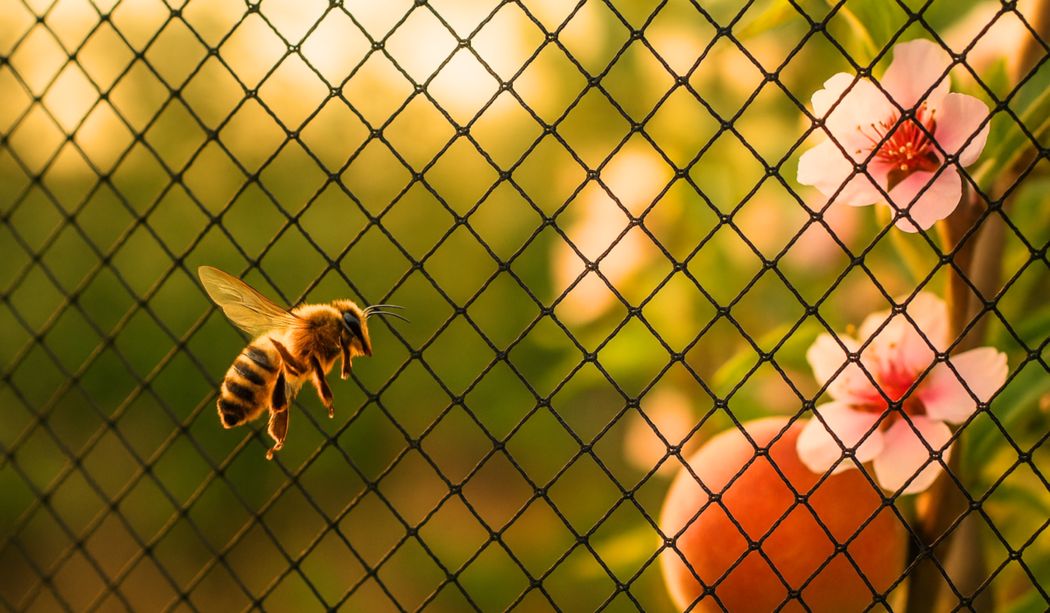
We have covered all these in this post.
Let’s get started.
Understanding Bird Netting Mesh Size
Bird netting features mesh holes designed to be just small enough to exclude birds but often large enough for beneficial insects like bees to pass through. The mesh size typically varies from 5mm to 20mm, depending on the netting type and purpose:
- Smaller Mesh (around 5mm): This size effectively keeps out the smallest birds and pests but can block bee access, which can hinder pollination if applied early in the flowering stage.
- Larger Mesh (around 17-20mm): Mesh this size allows bees and other pollinators to pass through freely while still preventing birds from reaching fruits and plants. For example, green bird netting with 19mm x 19mm mesh holes is specifically designed to exclude birds but let bees in for pollination.
Pollinator Access Through Bird Netting
Bees are vital for pollinating many fruit and vegetable crops, meaning preserving their access is essential. Most commercial bird netting products state that typical mesh sizes such as 17-20mm do allow bees to enter, ensuring flowers get pollinated without having to remove the net during flowering.
If very fine mesh is used, as sometimes mandated by local regulations (such as mesh apertures smaller than 5mm x 5mm in Victoria, Australia), bee access can be blocked, reducing fruit set and yield. In such cases, netting is often applied after pollination or fruit set to balance protection and pollination needs.
Practical Tips for Using Bird Netting with Pollination in Mind
- Select Appropriate Mesh Size: Choose mesh sizes around 17-20mm for bird netting to allow natural pollinators to access flowers.
- Timing of Installation: Avoid installing netting during peak flowering if using smaller mesh sizes; instead, apply it after fruit set.
- Consider Pollinator Activity: Observe pollinator presence and crop flowering cycles to decide the best strategy.
- Use in Combination: For sensitive crops, consider combining bird netting with managed pollination approaches such as introduced bee hives.
FAQs
What mesh size is ideal for allowing bees while keeping birds out?
A mesh size between roughly 15mm to 25mm (0.6 to 1 inch) strikes a good balance. Mesh sizes under 5mm block most bees and can reduce pollination, while larger meshes keep out bigger birds but not bees.
Will bird netting affect pollination negatively?
Professional bird netting with the right mesh size generally does not hinder pollinators like bees. However, very fine insect or shade nets with small mesh sizes can block bees and reduce pollination success.
Do bees get trapped or entangled in bird netting?
Bees rarely get trapped if the netting is installed taut and properly maintained. Loose or damaged netting can pose a risk, so secure installation reduces this issue.
What happens if you use very small mesh bird netting?
Small mesh nets can reduce airflow, light, and prevent bees from accessing plants, leading to poor fruit set and lower yields.